Graphic design proposal template
A graphic design proposal has one job: get the client to pick an option and say yes. The ones that do it restate the client's problem, offer three clear packages, and make the next step obvious. Here is what to put in yours, with wording you can adapt.
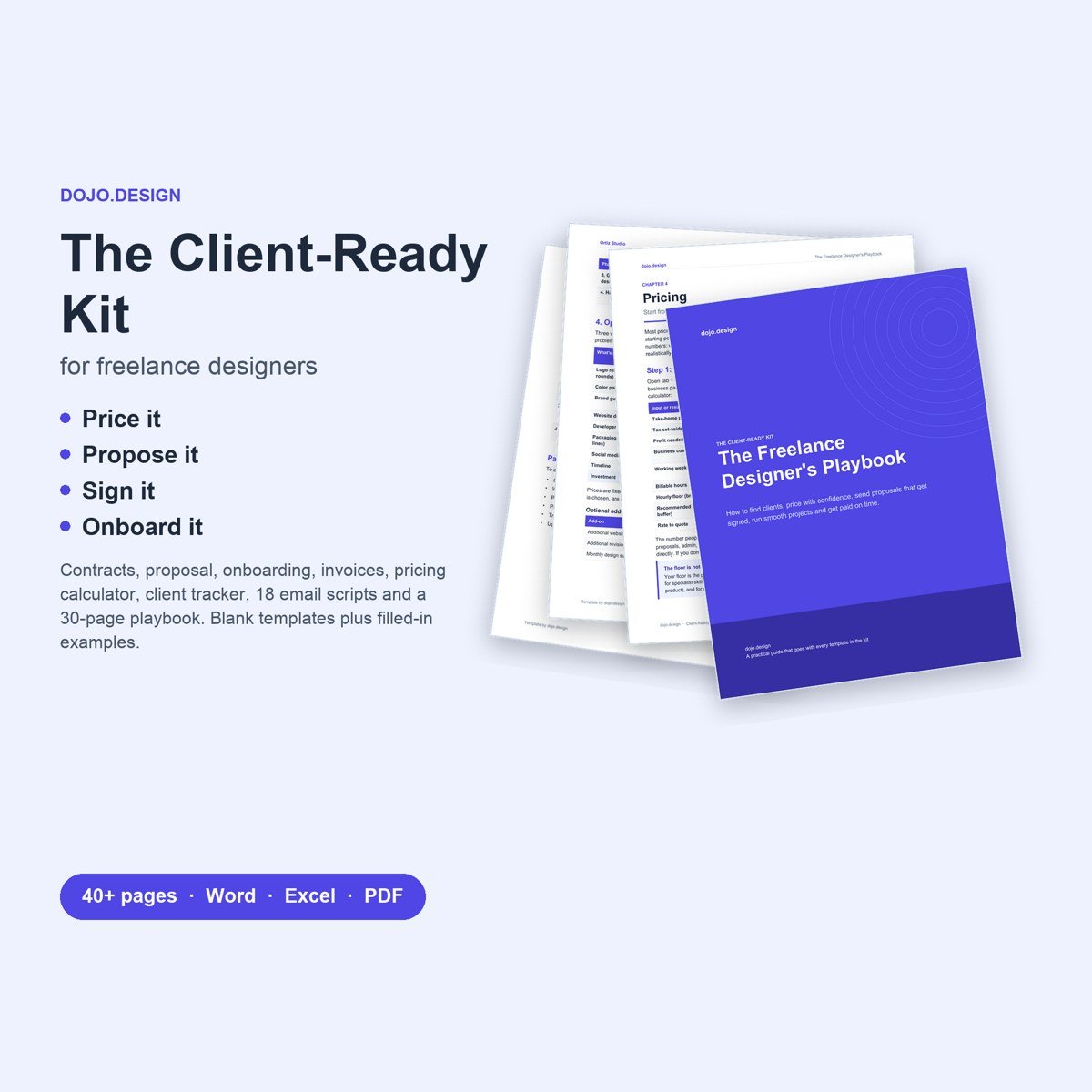
The Client-Ready Kit · $49
Project proposal with a filled-in example, full and short-form design agreements, onboarding questionnaire, welcome packet, creative brief, invoice, pricing calculator, client tracker, 18 email scripts and a playbook.
Get the Client-Ready KitContract + proposal only ($19)What to include
- What you heard. Open with two or three sentences on the client's situation, in their words, using a phrase from your call. This is the part that makes a proposal read as written for them rather than sent to everyone, so it goes before anything about you.
- Goals. List three outcomes the client would recognise: a business result, something they can observe, and something practical. "A brand that holds its own next to national competitors" is a goal. "A new logo" is a deliverable.
- Approach, in phases. A short table of phases with when each happens and what the client sees. Showing real work early and building each decision on an approved one reduces their risk, and that is what they are weighing.
- Three options, side by side. One comparison table: deliverables down the side, packages across the top, with revision rounds, timeline and price as the bottom rows. Mark the one you recommend and say why, tied to their goals.
- Fixed prices and a validity date. State that prices are fixed for the scope shown and valid until a named date, usually about 14 days out. The date stops the decision drifting and gives you a reason to follow up.
- Third-party costs. Fonts, stock images and similar costs are billed at cost with the client's approval. Give a rough figure if you can, so it does not surprise anyone later.
- Optional add-ons. A short priced list, such as an extra page, an extra revision round or monthly support. It lets a client spend more without reopening the whole quote, and it puts a price on the requests that usually arrive mid-project.
- Timeline with its assumptions. Give target dates for each milestone, then state what they depend on: feedback within a set number of business days, and final copy by a set date.
- Payment terms. Spell out the schedule before they say yes. A common shape is a deposit to reserve the start date, a payment at a milestone, and the balance before final files are delivered.
- Why you. Three short points: a relevant past project and what changed for that client, how you work, and why that fits this client. Only use results you can back up. A specific, modest, true claim beats an impressive vague one.
- Next steps and approval. Number the steps: choose a package, you send the agreement and deposit invoice the same day, then you book the kickoff. End with tick boxes for each package and a place to sign.
Free: our 19-point client contract checklist and minimum-rate worksheet (2-page PDF).
Download the free checklistMistakes to avoid
- Opening with your bio instead of the client's problem
- Sending one take-it-or-leave-it price
- Waiting a week to send it, after the call has gone cold
- Leaving out a validity date, so the decision never comes
- Treating the proposal as the contract and starting work on it
Example wording you can adapt
Plain-English wording for the sections people most often leave vague. Change the bracketed details to fit the project.
Recommendation. Three ways to approach this project. [Package 2] is the one I recommend, because [reason tied to the goals above].
Price and validity. Prices are fixed for the scope above and valid until [date]. Third-party costs such as fonts or stock images are billed at cost with your approval.
Timeline. This timeline assumes feedback within [3] business days of each presentation and final copy by [date].
Payment. [40]% deposit to reserve your start date and begin work. [30]% at [milestone]. [30]% before final files are delivered. Invoices are due within [14] days.
Next steps. Choose a package below and reply to this email, or sign below. I'll send the Design Service Agreement and the deposit invoice the same day. Once both are complete, we'll book the kickoff call.
What three options look like
This is the options table from the filled-in example in our kit, for a fictional coffee roaster that needs a brand refresh and a website. The prices are illustrative, so work out your own.
| What's included | Essentials | Signature (recommended) | Complete |
|---|---|---|---|
| Logo refresh (2 directions, 2 revision rounds) | Included | Included | Included |
| Brand guidelines | 4-page quick guide | 16 pages | 16 pages |
| Website design (desktop + mobile) | Not included | 5 pages | 5 pages |
| Packaging label system | Not included | Not included | Included |
| Timeline | 4 weeks | 8 weeks | 10 weeks |
| Investment | $3,900 | $8,400 | $12,600 |
The middle option solves the client's whole stated problem, the first is a real way to spend less, and the third is there for a client who wants more. Build the options by removing and adding deliverables, never by discounting the same work: if a client wants a lower price, something comes off the list.
Proposal or contract: do you need both?
Yes, and they do different jobs. The proposal sells: it explains the problem, the options and the price, so the client can choose. The contract protects: it covers ownership, revisions, late payment and what happens if the project is cancelled. A signed proposal shows what was agreed on scope and price, but it usually says little about those other questions.
The simple order is proposal, then agreement and deposit invoice, then kickoff. Send the proposal within 48 hours of the discovery call while the conversation is fresh, aim for 4 to 6 pages, and export it to PDF. Once the client picks an option, copy that scope and price into your agreement. Our guide to the graphic design contract template covers what the agreement needs.
To set the numbers, work out your hourly floor first with the free rate calculator, estimate the hours in each package, and quote the total as a fixed price.
Skip the blank page
Every point above is already written into our template, with highlighted fields to fill in and a PDF copy to send. Edit it in Word, Google Docs or Pages.
The Client-Ready Kit · $49
Project proposal with a filled-in example, full and short-form design agreements, onboarding questionnaire, welcome packet, creative brief, invoice, pricing calculator, client tracker, 18 email scripts and a playbook.
Get the Client-Ready KitContract + proposal only ($19)Questions
What should a graphic design proposal include?
The client's situation and goals, your approach in phases, three priced options, add-ons, a timeline with its assumptions, payment terms, why you are the right fit, and clear next steps with a place to approve.
How long should a design proposal be?
Aim for 4 to 6 pages. It needs to be long enough to show you understood the problem and short enough that the client can compare the options and decide.
Should I offer one price or three options?
Three is a good default. The client's question moves from whether to hire you to which option suits them, and a lower-priced option gives them a way to say yes without you discounting.
How soon should I send a proposal after the call?
Within 48 hours, while the conversation is fresh. Add a validity date, about 14 days out, so the decision does not drift.
What if the client doesn't reply?
Follow up after 3 or 4 business days, ask whether they have questions or would like the scope adjusted, and send one final note to close the loop. The Client-Ready Kit includes email scripts for sending the proposal and both follow-ups.
Is a signed proposal enough, or do I need a contract?
Use both. A proposal agrees the scope and price; a contract covers ownership, revisions, late payment and cancellation. This is general information, not legal advice.
Can I edit it in Google Docs?
Yes. The files are Word documents that open in Google Docs and Apple Pages, with PDF copies included.
More templates for your business: browse the full shop or try the free rate calculator.
Templates are a starting point, not legal advice; laws vary by location. Digital products: all sales are final; faulty file? Email hello@dojo.design and we’ll fix it or refund you.